Check out my books
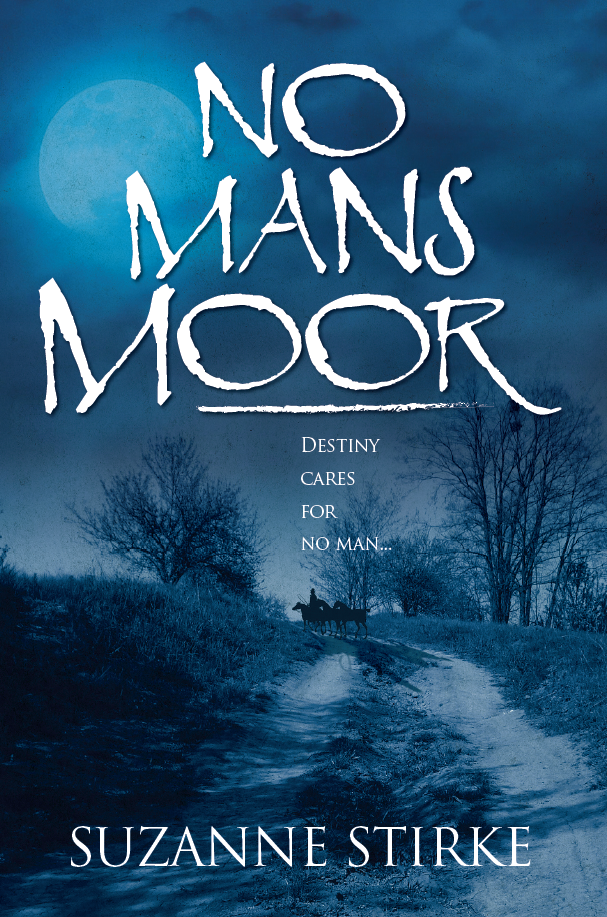
No Mans Moor
The population of Great Britain is struggling with the economic impact of the newly ended Napoleonic Wars and a mystifyingly cold spring threatens to destroy the crops and harvests.
Fordy Robson, living at Worlds End Inn on the remote No Mans Moor in the North Riding of Yorkshire, naïvely believes the problems facing the nation won’t affect him. With an established lucrative side line dealing in smuggled goods and ambitions to expand his horse breeding enterprise, he thinks he has his future planned out.
However, one dark night while out collecting contraband tea he stumbles across a young woman. Initially unaware she is Anna, daughter of Sir Robwyn Stillerton, owner of the estate where the smuggling is based, he finds events and feelings develop beyond his control and Fordy begins to realise there is a price to pay for everything in life.
Inspiration
The old county of the North Riding of Yorkshire has many old tales woven into its fabric and remnants of days gone by can be found round every corner.
Some years ago, travelling by car along No Mans Moor Lane, to the south of Newton le Willows, my husband remarked on the width of the grass verges and said he had always thought this was an old droving road. That was enough to set my imagination off and I set about researching the droving routes in Yorkshire. My interest in local history led to many new discoveries and when I came across the Jeffries Map of the 1770’s which identified Worlds End and Kings Pasture House I set about pulling together the facts that I have used in recreating the world of Fordy Robson.
Hird’s Annals of Bedale made a great starting point along with Bulmer’s Gazetteer.
As I went about exploring Fordy’s world I discovered the dark stories of smuggling in the region and the complexities of cock fighting. Researching the history of Bedale, Richmond Racecourse and Yarm has been fun, with many walks and guidebooks to help us on our way.
Bedale itself was full of pubs, hotels and hostelries. The Royal Oak where Fordy, Abe and Chalky went drinking is still there, but no longer a public house.
The main highway in the district was, as is now the Great North Road or the A1, back in the 1800’s the stretch that ran past Bedale was known locally as Leeming Lane.
There was a miller called John Burgess who had both Aiskew and Bedale Mills in 18th century although the John Burgess that appears in No Mans Moor is a fictitious character and bears no resemblance to any John Burgess’s either living or deceased.
The Duke of Malbury is a fictious character based on a number of characters from the time as is the smuggler Jim Adams.
Some of the research was challenging and facts elusive at times however it was relatively easy to recreate the agricultural and rural world of 1816, to some extent very little has changed. The main difference is of course our mode of transport.
I hope you enjoy dipping into Fordy’s world as much as I did researching and writing it.
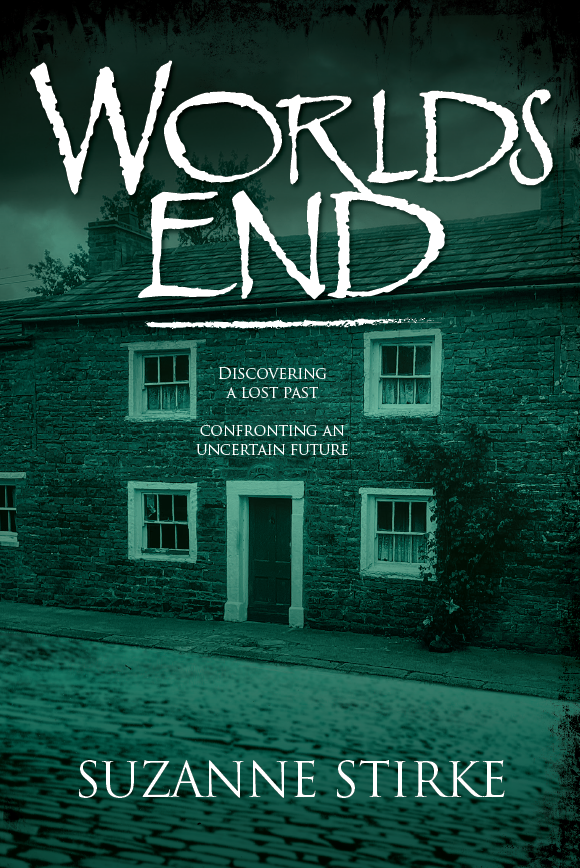
Worlds End
Julia's fascination with the old abandoned property on No Mans Moor Lane runs deep. Not only is it her own sanctuary from the stresses of her farming life and unhappy marriage but she believes another young woman from the past haunts the house.
So when a buyer appears for Mile End House Julia fears the loss of her safe haven and is concerned the new owners will destroy the house's history.
But the purchaser is Johnny, an old friend of her husband's. Retired from the army, he is sympathetic towards Mile End's past and enlists Julia to help him renovate it. As they strike up a friendship they discover it used to be called Worlds End and begin to uncover the house's secrets.
The closer Johnny and Julia get to the truth, the closer they become to each other and Julia finds herself facing hard choices if she wants to fulfil her ambitions and resolve her own problems as well of those of Worlds End's resident ghost.
Inspiration
The story of Fordy Robson and conclusion was originally intended to be contained in one book. However, recreating the world of 1816 and exploring Fordy’s story became a more involved and immersive project than I had anticipated and I quickly realised a second book would be needed to finish the story.
Picking up the threads 200 years later with Julia, Worlds End was an opportunity to follow her as she uncovered the the secrets of the old house on the edge of their farm. Having already established the setting in, No Mans Moor my challenge was to place Julia in a situation that mirrored Fordy and Anna’s life 200 years previously whilst dealing with modern day issues. Strangely, in writing I found the biggest contrast was transport and to some extent easier communication.
Above all Julia had to be her own woman with the drive and intelligence to dig deeper into Fordy’s story and I was keen to look at the life of a woman married to a farmer as I know it can be a challenging role and requires an understanding of both agriculture and the pressures it can inflict on family life.
As Julia peels back the secrets of the centuries part of my inspiration came from having personally renovated a derelict old farmhouse and whilst we came across many surprises including thirteen fireplaces, several old wells and steps to a shallow cellar, we found nothing in comparison to Julia’s discoveries.
Although Fordy is the main character in No Mans Moor, Anna proves herself to have strength and courage, characteristics Julia also shows through her story.
I hope you enjoy Julia’s journey and agree with some of the decisions she makes.
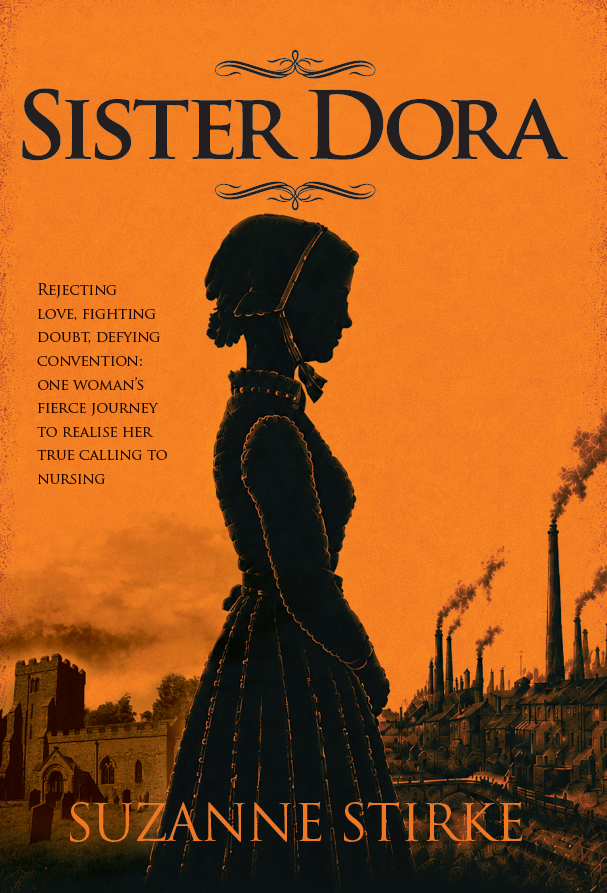
Sister Dora
Dora’s heart is set on nursing but, as a young Victorian woman from a highly conservative religious background, the path to fulfilling her dreams is fraught with obstacles. Her only option is to yield to the constraints of entering a nunnery in order to train as a nurse, becoming Sister Dora.
Struggling to submit to those in authority, Sister Dora only begins to realise her ambitions when in Redcar and Middlesborough she becomes a nursing pupil to the acclaimed Sister Mary Jacques. Still in training, Dora is suddenly sent to Walsall Hospital where the demands of nursing in a densely populated working class town both challenge and hone her skills as she treats those severely injured by the dangers of Victorian industrialisation.
Battling disease, gruesome wounds, poverty and death, Sister Dora also faces personal crisis. Forced to choose between the career she has dedicated herself to and the man she loves, Dora must search her soul to decide if her bond with the townsfolk of Walsall and their trust in her revolutionary nursing care is her true calling.
Inspiration
This book has been forty years in the making. I first learnt about Sister Dora from my husband’s family. My father-in-law, Jeffrey and grandfather-in-law, Ted were fiercely proud of their connections to Dora. Ted was both related to and knew Dora’s Stirk nieces who lived on neighbouring farms.
It is over fifty years since Jo Manton wrote her excellent book, Sister Dora, The Life of Dorothy Pattison, and I wanted to bring her story to a new generation using the genre of historical fiction.
While the stories about her accomplishments and acheivements are widely know in Walsall it is the struggle she had whilst at Hauxwell that fascinated me the most. Without a strong character and determination the environment at Hauxwell could have destroyed her, as was the case with some of her sisters.
An aspect that interested me was the predicament of women born to clergymen. Often inheriting their father’s intelligence, they were trapped in a world of apparent gentility and privilege. But we don’t have to go far to know this is untrue if we consider Jane Austen or the Bronte sisters.
Hidden behind the respectability of the cloth, Dora, along with her sisters and to a lesser extent her younger brother were suppressed and mistreated. Some of the sisters showed defiance by marrying but Dora could see beyond that choice although Victorian Britain was not a place for single women to do their own thing, men and circumstances usually conspired against them, thwarting any hope of achieving their aspirations.
With hindsight we can look back at her story and imagine her path was obvious, preordained to some extent, but of course it wasn’t. Every choice she made was a response to her circumstances, if she had made different choices her story maywell have been very different.
In writing about her I have tried to show the uncertainty of her life and the strength and courage it took for her to both accept the restraints placed upon her but also the ability to take a chance when it manifested itself.
Using Jo Manton’s work and many other sources I have tried to recreate the world that Dora lived in, from the day to day drudgery and fear she endured at Hauxwell, the excitement of discovering the world through her brother Mark’s influence and her strength to leave behind her childhood home for a life of independence.
One of my biggest pleasures in recreating her world was researching Walsall, how it had developed into an industrial powerhouse and was producing saddlery for the whole of the British Empire by the time Dora arrived in the town. A world that Dora came to know intinately and loved with all her heart.
There is so much more to the story of Dorothy Pattison and it is my hope that this novel whets your appetite to research her life further.